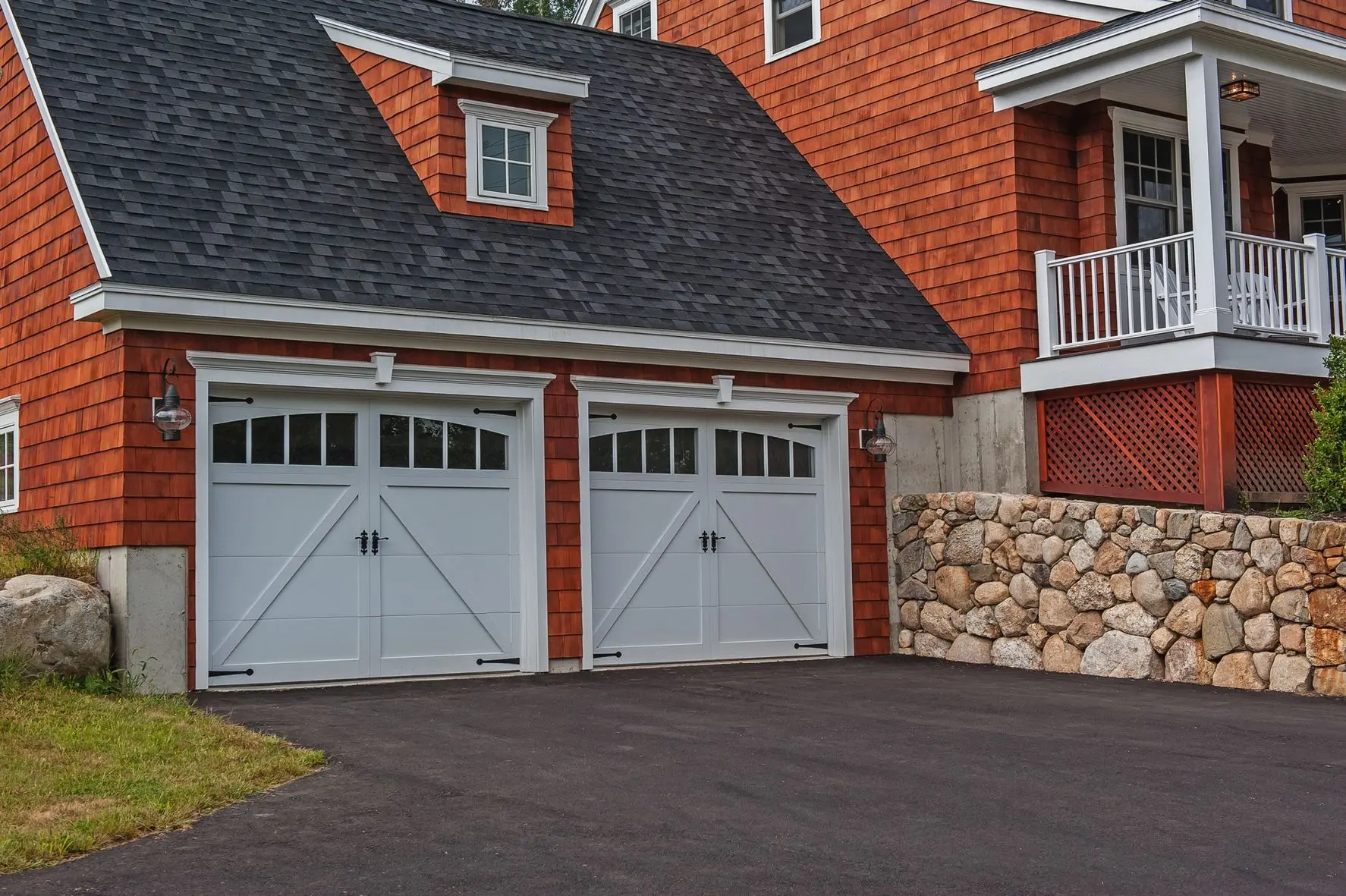
A Sacramento garage can be tolerable in the morning and punishing by late afternoon. If the door faces prolonged sun, that large surface can become one of the main places where outdoor heat affects the space. The obvious response is to buy the garage door with the highest insulation number available. That is not always the right use of your budget.
An insulated garage door is often a smart choice when the garage is attached to the house, sits below a bedroom, doubles as a workshop or gym, or needs a stronger and quieter door. It may not be worth the added cost for a detached garage used only to park a car or hold items that are not temperature-sensitive.
MOJA Garage Doors helps Sacramento-area homeowners compare those tradeoffs before choosing a door. This guide explains what the ratings mean, where insulation helps, what it cannot do, and how to decide without paying for a feature your garage does not need.
The Short Answer for Sacramento Homeowners
For many attached garages in Sacramento, insulation is worth considering. The California Energy Commission divides the state into 16 building climate zones because envelope and mechanical-system decisions need to account for regional conditions. The CEC ZIP code table places 95829, the ZIP code of MOJA’s Sacramento address, in Climate Zone 12. That designation is not a garage-door shopping rule, but it is a useful reminder that a choice suited to a mild coastal location may not be the best choice for an inland Sacramento property.
The strongest cases for insulation are practical:
- The garage shares a wall, ceiling, or entry door with conditioned living space.
- A bedroom or bonus room is directly above the garage.
- Someone regularly works, exercises, crafts, or spends time in the garage.
- The door receives sustained afternoon sun.
- Quieter operation and a more rigid door matter to the household.
- You expect to stay in the home long enough to value improved comfort and construction.
A basic non-insulated door can still be a sensible choice when the garage is detached, rarely occupied, naturally shaded, or being updated on a strict budget. The goal is not to buy the largest R-value. It is to match the door to the building and the way you use it.
What Garage Door Insulation Actually Does
Insulation slows heat transfer through the door sections. The U.S. Department of Energy describes home insulation as a barrier designed to reduce heat transfer and specifically notes that garages can be susceptible to it. In a garage door, manufacturers typically place foam within or between door layers.
That can help the garage temperature change less quickly as outdoor conditions shift. It does not turn an unconditioned garage into an air-conditioned room. Every time the door opens, a large volume of outside air enters. Gaps around the perimeter, an uninsulated ceiling, direct sun on the roof, and heat moving through walls can also remain important.
Think of the door as one part of the garage envelope. If the old door has visible gaps, worn perimeter seals, or poor fit, correcting those conditions may be as important as the insulation rating. DOE also points to leaky doors and other openings as contributors to unwanted heat transfer, which is why fit and sealing deserve attention alongside the door sections.
Insulation may offer benefits beyond temperature moderation. Amarr says its insulated doors can reduce the transfer of outdoor air, help keep garage temperatures within a narrower range, and provide quieter operation. Clopay likewise describes insulated construction as quieter and more resistant to dents than a single-layer door, while acknowledging the higher upfront cost.
Understanding R-Value Without Getting Lost in the Numbers
R-value describes resistance to heat flow. A higher number indicates greater resistance for the material being rated. Amarr explains that R-value is calculated from insulation thickness and material properties, while U-factor measures the rate of heat loss through an entire tested door assembly. Lower U-factor is better, but higher R-value is better.
Those numbers should not be treated as interchangeable. They also should not be compared carelessly across brochures. Ask whether a published number applies to the insulation material, a door section, or the complete installed assembly. Seams, windows, section joints, seals, and installation quality influence real-world performance.
Clopay reports that its insulated models use polystyrene or polyurethane and span different published R-values by construction. A product rating is not a promise about the temperature or utility-bill change in a particular Sacramento home.
A better buying question is: how much thermal separation does this garage need? A moderate insulated option may be enough for parking and storage. A higher-performance assembly may make more sense for a garage beneath living space or one used daily as a workshop. Request the current technical sheet for the exact model, size, panel design, and window configuration you are considering.
Polystyrene, Polyurethane, and Layer Construction
The insulation material and the way the door is built matter together.
Polystyrene insulation usually comes as rigid panels fitted into the door sections. It can provide a meaningful step up from a single-layer door and may be a practical middle choice when you want some temperature moderation and quieter operation without selecting the highest-performance construction.
Polyurethane insulation is injected as foam that expands within the section. Clopay explains that the expanding foam fills crevices and bonds to the door structure, which can improve rigidity and vibration resistance as well as thermal performance. Polyurethane models commonly occupy the higher end of a manufacturer’s insulation offerings.
Layer count describes more than insulation. A one-layer door is typically a single exterior skin. A two-layer door adds insulation to that skin. A three-layer door generally encloses the insulation between exterior and interior skins. Exact construction varies by model, so do not assume every door with the same layer count has the same rating, strength, or finish.
MOJA carries brands that include C.H.I., Clopay, Amarr, Wayne Dalton, AlumaDoor, and Digby. Available collections, specifications, finishes, and lead times can change. Start with the garage door product options that fit the opening and the home, then compare insulation within those realistic choices.
Where Insulation Delivers the Most Value
Attached Garages
An attached garage has more connection points with the house than a detached structure. If the garage shares walls with a kitchen, hallway, laundry room, or bedroom, reducing temperature swings in the garage may improve comfort near those boundaries. Amarr specifically identifies attached garages and garages below living areas as situations where insulation can matter.
The connecting wall and ceiling still need appropriate construction and air sealing. A better door cannot compensate for every weakness elsewhere, but it can address the largest moving opening.
Garages Used as Living Support Space
A workshop, home gym, hobby area, laundry zone, or gathering space benefits more from a moderated temperature than a space used for brief parking. Insulation does not condition the room, yet it may reduce how quickly the garage becomes uncomfortable. If people spend hours there, the added cost is easier to justify.
Rooms Above the Garage
A room above the garage may feel the garage environment through the floor. Door insulation cannot replace a properly insulated and sealed floor, but reducing extremes below can be one part of a broader comfort plan.
Homes Where Noise and Door Rigidity Matter
Foam-backed sections can dampen vibration, and multi-layer construction tends to feel more substantial than an uninsulated skin. That can be valuable when the garage is close to a bedroom or when street noise carries through the door. Quiet operation also depends on correct track alignment, rollers, hinges, springs, and opener setup. Insulation will not fix worn hardware.
When Insulation Is Not Worth Buying
A trustworthy recommendation includes reasons to say no.
Choose a non-insulated or lower-cost door when the garage is detached, used only for vehicles, and not expected to remain comfortable. If you open the door repeatedly throughout the day, much of the temperature benefit disappears whenever the full opening is exposed. A deeply shaded garage with adequate ventilation may also see less practical improvement than a west-facing attached garage.
Insulation may be a poor priority if the budget first needs to cover safe, reliable operation. Correct sizing, sound tracks, properly matched springs, secure attachment, and perimeter sealing come before an upgraded foam package. Decorative windows, specialty finishes, and insulation can all affect the quote, so decide which outcomes matter most.
Clopay identifies lower upfront cost, lighter weight, and simpler construction among the advantages of non-insulated doors, and notes that they can suit detached garages where temperature control is not a priority. That makes a non-insulated door a legitimate solution, not automatically a lesser decision.
How Windows, Color, and Style Affect the Choice
Insulation is only one part of a door package. Windows bring daylight into the garage, but the glazing and frame can change the overall thermal behavior of the door. Ask for specifications on the exact window option rather than assuming the solid-panel rating carries over unchanged.
Color and exposure also deserve attention. Follow the manufacturer’s current guidance for color, material, and sun exposure before selecting a finish.
Style does not force one insulation choice. Homeowners can compare traditional raised-panel garage doors, clean stamped-shaker designs, and modern full-view garage doors while asking what thermal packages are available for each collection. A glass-forward door may prioritize light and appearance, while a steel sandwich door may prioritize thermal resistance and rigidity.
What Determines the Installation Quote
There is no responsible single price for an insulated garage door without the opening and product details. The quote can change with:
- Door width and height
- Insulation material and section construction
- Steel gauge, finish, panel design, and windows
- Track configuration and available headroom
- Spring system and door weight
- Removal and disposal of the existing door
- Framing or opening corrections
- Perimeter seal and trim needs
- Opener compatibility with the new door
- Product availability and installation scheduling
A heavier replacement door must be balanced with the correct spring system. It should not simply be attached to an opener configured for a different door. A professional site check helps identify clearance, framing, track, and operator issues before the order is placed. Learn more about MOJA’s garage door installation in Sacramento.
A Practical Sacramento Decision Checklist
Before approving an insulated upgrade, answer these questions:
- Is the garage attached, or is there occupied space above it?
- How many hours per week does anyone spend in the garage?
- Which direction does the door face, and how much direct sun reaches it?
- Is comfort, noise reduction, or dent resistance the main goal?
- Are the ceiling, shared walls, entry door, and perimeter seals in reasonable condition?
- How often will the overhead door remain open?
- What rating applies to the exact door and window configuration?
- What will the insulation upgrade add to the actual quote?
If several answers point toward daily comfort and connection to the home, insulation is usually worth serious consideration. If the garage is separate, shaded, rarely occupied, and opened frequently, a well-installed non-insulated door may be the more honest choice.
Frequently Asked Questions
Does an Insulated Garage Door Keep a Sacramento Garage Cool?
It can slow heat transfer and reduce temperature swings, but it will not actively cool the garage. Direct sun, roof and wall construction, air leaks, ventilation, and how often the door opens all affect the result. Treat insulation as one component of the envelope, not as air conditioning.
What R-Value Should I Choose for a Garage Door?
There is no universal number for every Sacramento home. Start with garage use, attachment to the house, exposure, and budget. Compare ratings for complete, current door configurations where available, especially when adding windows. A moderate insulated model may be enough for storage, while frequent occupancy or a room above may justify a higher-performance assembly.
Is Polyurethane Better Than Polystyrene?
Polyurethane generally offers greater thermal performance for a given door thickness and bonds to the door structure as it expands. Polystyrene can still provide a useful improvement over a non-insulated door at a different price point. The right choice depends on the needed performance, construction, and quote.
Will an Insulated Door Lower My Energy Bill?
It may reduce heat transfer through the garage opening, particularly when the garage is attached, but no responsible installer should promise a specific savings amount without analyzing the whole building. Air leakage, shared walls, ceiling insulation, HVAC boundaries, door-opening habits, and weather all influence energy use.
Is an Insulated Garage Door Quieter?
Insulated sections can reduce vibration and outside noise, and manufacturers describe quieter operation as a benefit. However, squeaks, grinding, rattling, and abrupt movement can also come from rollers, hinges, tracks, springs, or the opener. Those conditions need diagnosis rather than being covered up with a new door specification.
Can I Add Insulation to My Existing Garage Door?
Aftermarket kits exist, but added material changes door weight and may affect balance, spring requirements, clearance, and opener operation. Before modifying a moving door system, have the door evaluated. If the existing sections are damaged, poorly fitted, or near the end of service, replacement may offer a cleaner and better-integrated result.
How Do I Compare Insulated Door Quotes Fairly?
Compare the same size, panel style, insulation type, layer construction, window package, finish, hardware, seals, removal scope, and installation work. Ask which rating is published and what it measures. A lower quote may describe a materially different door rather than the same product at a better price.
Talk Through the Options With MOJA Garage Doors
The best door is not automatically the most insulated model. It is the one that fits your garage, the Sacramento climate, the way your household uses the space, and the budget you want to protect.
MOJA Garage Doors is a family-owned Sacramento-area company that takes a professional, friendly approach and explains options before recommending an upgrade. Call (916) 975-0705 or contact MOJA Garage Doors to request an evaluation. Same-day service may be available, subject to scheduling and product availability.
MOJA Garage Doors is located at 8359 Elk Grove Florin Rd Ste 103-354, Sacramento, CA 95829.