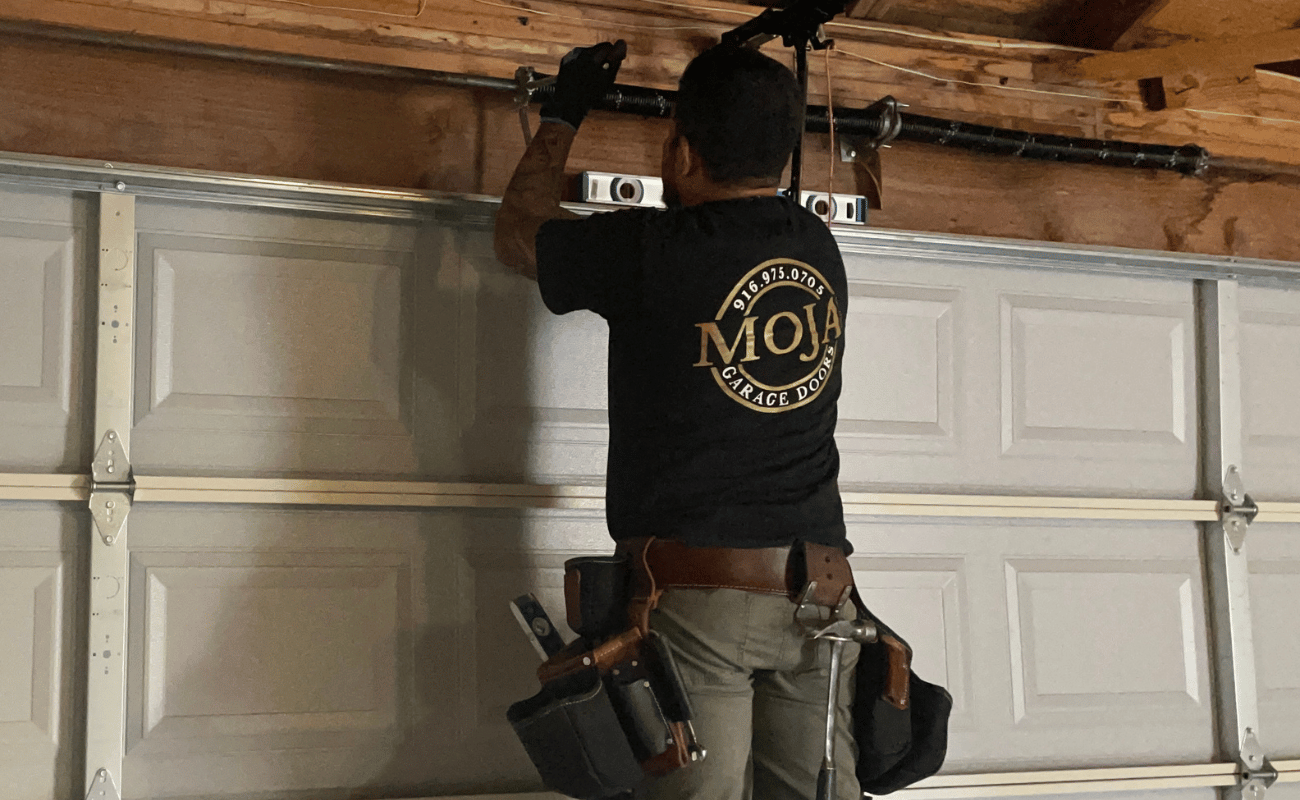
Your garage door springs work harder than almost any other part of your home. Every time the door opens or closes, these springs bear the full weight of the door, lifting hundreds of pounds with each cycle. Over time, that constant tension takes a toll, and worn-out garage door springs can turn a simple daily task into a safety hazard. Knowing the warning signs early can save you from a sudden breakdown, an expensive repair, or worse, an injury.
At MOJA Garage Doors, we’ve spent years helping homeowners throughout Sacramento, California recognize spring problems before they become emergencies. Here’s what to look for, why it matters, and what to do next.
Why Garage Door Springs Matter So Much
Garage door springs counterbalance the weight of the door so it can open and close smoothly. Without properly functioning springs, your garage door opener would have to work far harder than it’s designed to, and the door itself becomes difficult or dangerous to lift by hand.
There are two main types of springs used in residential garage doors.
Torsion springs sit horizontally above the door and twist to store energy. Extension springs run along the horizontal tracks on either side of the door and stretch to create tension. Both types wear down over time, though the warning signs can look slightly different depending on which system your door uses.
Quick Answer: The Most Common Signs of Worn-Out Springs
If you’re short on time, here’s the short version. A garage door that opens or closes unevenly, moves slower than usual, makes loud popping or grinding noises, or feels unusually heavy when lifted manually is likely showing signs of spring wear. Visible gaps, rust, or stretching in the springs are also strong indicators that replacement is needed soon.
Now let’s look at each of these signs in more detail.
Signs Your Garage Door Springs Are Wearing Out
The Door Opens or Closes Unevenly
One of the earliest and most noticeable signs of a failing spring is a door that looks crooked while moving. If one side of the door appears higher than the other, or the door tilts as it travels along the tracks, one of the springs may be losing tension while the other is still working normally. This uneven strain can also damage the tracks, rollers, and opener if it isn’t addressed.
The Door Feels Heavier Than Normal
Try this simple test. With the opener disconnected, lift the door manually about halfway and let go. A door with healthy springs should stay in place or move only slightly. If it drops quickly or feels like dead weight in your hands, the springs are no longer providing enough lift. This is one of the clearest signals that spring replacement is needed.
Loud Noises During Operation
A healthy garage door should operate with a relatively smooth, consistent sound. Popping, snapping, grinding, or a sudden loud bang can point to a spring that is stretched, cracked, or close to breaking. Some homeowners describe hearing a gunshot-like sound at the exact moment a spring snaps.
Visible Gaps or Separation in the Coils
Torsion springs are made of tightly wound coils. When you notice a visible gap of an inch or more between coils, this usually means the spring has stretched beyond its normal working range. This kind of separation is a strong warning sign that failure is coming soon.
Rust and Corrosion
Sacramento’s climate brings warm, dry summers and occasional wet winters, and that shift in humidity can accelerate corrosion on metal components over time. Rust weakens the structural integrity of a spring, making it more likely to snap unexpectedly rather than wear down gradually. If you spot rust forming on your springs, it’s worth having them inspected sooner rather than later.
Slow or Jerky Movement
A door that used to glide smoothly but now moves in short jerks, pauses partway through its cycle, or takes noticeably longer to open is often struggling because the springs can no longer provide consistent tension. This puts extra strain on the opener motor, which can lead to additional repair costs down the line.
The Door Won’t Stay Open
If your garage door starts to close on its own after you’ve opened it, or it won’t hold its position at all, worn springs are frequently the cause. This happens because the springs are no longer strong enough to counterbalance the door’s weight at that position.
Why You Shouldn’t Wait to Replace Worn Springs
Garage door springs operate under extremely high tension, and a spring that fails while under load can cause serious injury or property damage. Waiting until a spring breaks completely often means dealing with a garage door that won’t open at all, which can leave your car trapped inside or your home less secure.
Beyond safety, ignoring worn springs also puts unnecessary strain on other parts of the system. The opener, cables, rollers, and tracks all work together, and when springs aren’t functioning properly, those other components wear out faster too. Addressing spring issues early is almost always more affordable than waiting for a full system failure.
Torsion Springs Versus Extension Springs
Torsion springs tend to last longer and offer more control over the door’s movement, but they require specialized tools and knowledge to replace safely because of the tension involved. Extension springs are generally used on lighter doors and can wear out from repeated stretching and contracting.
Regardless of which type your garage has, spring replacement is not a task recommended for homeowners to attempt on their own. The tension stored in these components can cause sudden, forceful movement if released incorrectly.
How Long Do Garage Door Springs Typically Last
Most residential garage door springs are rated for a certain number of open and close cycles, often somewhere between 10,000 and 15,000 cycles depending on the spring and how frequently the door is used. For an average household, that translates to roughly seven to twelve years of use, though usage habits, door weight, and climate exposure all affect the actual lifespan.
Frequently Asked Questions
How do I know if it’s the spring or the opener causing the problem? If the door struggles to move even when disconnected from the opener and operated by hand, the issue is almost certainly the springs rather than the opener itself.
Is it safe to replace garage door springs myself? No. Torsion and extension springs are under significant tension, and attempting to replace them without the proper tools and training can cause serious injury. Professional replacement is the safest option.
Can I replace just one spring, or do both need to be replaced at the same time? Springs are typically installed in pairs and wear at a similar rate. Replacing both at once helps ensure even tension and reduces the chance of a second failure shortly after the first repair.
What happens if a garage door spring breaks while the door is open? The door may become difficult or impossible to close and could drop suddenly. If this happens, avoid operating the door manually or with the opener until a technician inspects it.
How often should garage door springs be inspected? An annual inspection is a good general guideline, though homes with heavier daily use may benefit from checking more frequently.
Trust MOJA Garage Doors With Your Spring Replacement
If your garage door is showing any of these warning signs, it’s time to have your springs inspected before a small issue becomes a bigger, more costly problem. MOJA Garage Doors has been serving Sacramento and the surrounding areas, providing safe and efficient garage door spring replacement backed by certified and experienced technicians. As a licensed, bonded, and insured local company, we understand exactly what Sacramento homeowners need when it comes to keeping their garage doors safe and reliable.
Don’t risk your safety with a worn out spring. Call MOJA Garage Doors today at (916) 975-0705 for a professional assessment and dependable spring replacement service you can count on.