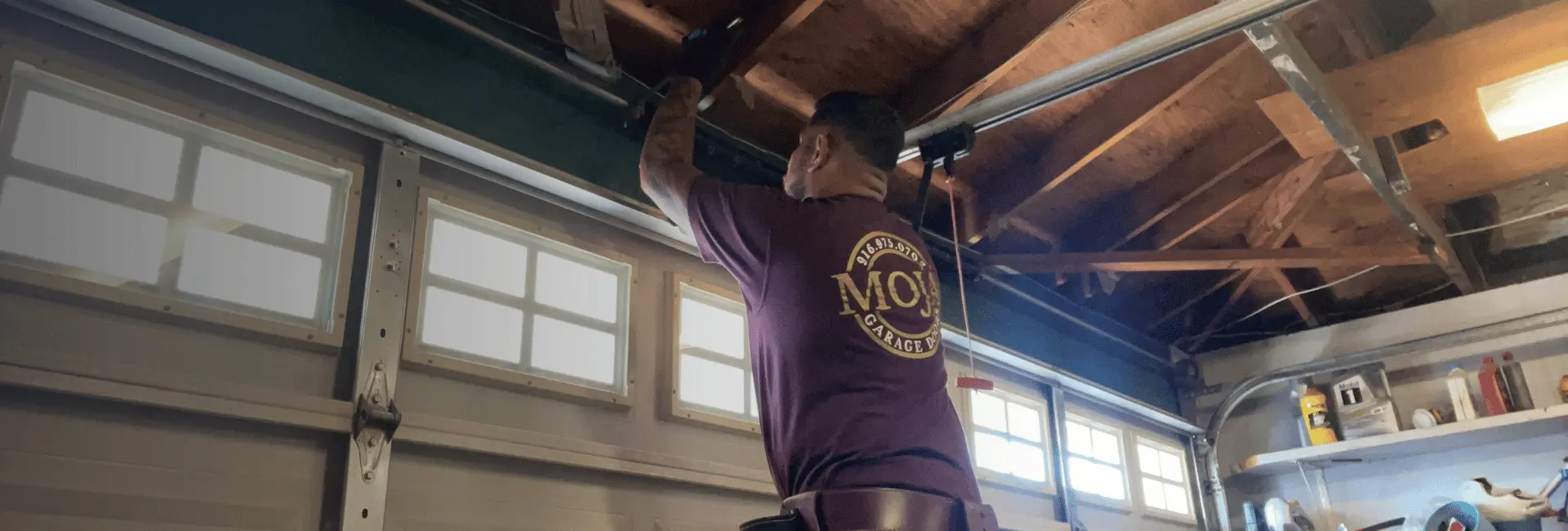
A fall garage door maintenance checklist helps homeowners spot wear, prevent avoidable problems, and keep their garage doors operating safely. Start with a visual inspection of the springs, cables, rollers, tracks, and weather seals. Clear debris, observe normal operation, and follow your opener manual’s safety testing instructions. If you notice damaged hardware, uneven movement, or a failed safety test, stop using the door and schedule professional service.
Your garage door works hard throughout the year, but it’s easy to overlook until something goes wrong. A little attention in the fall can help you recognize developing issues before they interrupt your daily routine.
For Sacramento homeowners, seasonal maintenance isn’t just about preparing for cold weather. Dust, dry conditions, falling leaves, and everyday use can also affect garage door performance.
At MOJA Garage Doors, we believe homeowners should understand what their garage door needs without feeling pressured into unnecessary repairs. This six-step checklist will help you identify potential problems and decide when professional maintenance makes sense.
Why Is Fall Garage Door Maintenance Important?
Fall is a practical time to inspect your garage door after months of regular use.
Even a door that opens and closes normally may develop worn components, loose weather seals, or changes in operation that aren’t immediately obvious.
Seasonal maintenance helps homeowners:
- Recognize early signs of mechanical wear.
- Keep debris away from the door opening.
- Identify damaged weather seals.
- Check whether safety features are working correctly.
- Understand when professional inspection is necessary.
- Maintain a record of changes in garage door performance.
Sacramento generally experiences mild fall weather compared with regions that face early freezing conditions. Still, seasonal changes provide a useful reminder to inspect equipment that gets used every day.
The goal isn’t to replace parts simply because a new season has arrived. It’s to make sure your garage door remains safe and dependable.
Fall Garage Door Maintenance Checklist at a Glance
Before getting started, remember that garage door springs, cables, and related hardware can remain under considerable tension.
Never attempt to adjust, disconnect, or repair these components yourself.
Use this table to understand what you can safely observe and when to seek professional help.
| Maintenance Check | What to Look For | When to Call a Professional |
| 1. Review door performance | Changes in noise, speed, or movement | Unusual operation or previous damage |
| 2. Inspect visible components | Worn rollers, damaged cables, bent tracks | Broken or displaced hardware |
| 3. Clear debris and check seals | Leaves, dirt, blocked sensors, torn seals | Damaged sensor components or uneven closing |
| 4. Observe door movement | Smooth opening and closing | Jerking, grinding, or crooked movement |
| 5. Check safety features | Photo-eye and reversal function | Failed safety test or unexpected reversal |
| 6. Determine maintenance needs | Wear, service history, or recurring issues | Repair concerns or overdue professional inspection |
Complete these checks in order. If you discover a serious problem during an early step, stop rather than continuing to operate the door.
1. Start With a Garage Door Performance Check
Before inspecting individual components, think about how your garage door has been operating lately. Has it started making a noise you haven’t heard before? Does it seem slower than usual? Has anyone in your household noticed a change? These observations can help identify problems without touching potentially dangerous hardware.
Pay attention to:
- New grinding, scraping, or rattling sounds.
- Changes in opening and closing speed.
- Intermittent opener response.
- Uneven movement during previous use.
- A recent need for garage door repairs.
Write down anything unusual, including when the problem first appeared. For example, telling a technician that your garage door made a scraping sound near the left track is more helpful than simply saying it sounds broken. If the door is already showing signs of serious damage or unsafe movement, skip further testing and arrange an inspection.
2. Visually Inspect Springs, Cables, Rollers, and Tracks
A visual inspection is one of the most useful parts of fall garage door maintenance. With the door fully closed and inactive, stand at a safe distance and examine the components you can see from the garage floor.
Check the Garage Door Springs and Cables
Garage door springs help counterbalance the weight of the door, while lift cables work with the system to support controlled movement.
Look for:
- Visible gaps in a torsion spring.
- Frayed or hanging cables.
- Rust or significant corrosion.
- Components that appear displaced.
- Obvious differences between the left and right sides.
If you notice any of these issues, do not operate the garage door. According to the Door & Access Systems Manufacturers Association’s garage door safety guidance, spring and cable repairs should be handled by trained professionals because these components can cause serious injury. If you suspect cable damage, MOJA offers garage door cable repair services to help identify and address the problem.
Look at the Tracks, Rollers, and Panels
Next, examine the visible garage door tracks, rollers, hinges, and panels without touching or adjusting them. Watch for bent tracks, rollers outside their proper position, damaged panels, or obvious wear. Don’t attempt to straighten tracks or reposition rollers. These problems can affect how the door moves and may require a professional garage door repair inspection.
3. Remove Debris and Check the Weather Seals
Fall often brings more leaves, dust, and outdoor debris into garage entrances., Keeping the doorway clear is a simple maintenance task that can help prevent obstructions. With the garage door closed and inactive, inspect the area around the threshold.
You can safely:
- Remove loose leaves and debris from the floor.
- Move stored items away from the door’s path.
- Check for visible damage to the bottom weather seal.
- Gently wipe accessible photo-eye sensor lenses according to the opener manual.
- Look for gaps that allow dirt, air, or moisture inside.
A worn bottom seal may allow water, dust, and insects to enter the garage. However, an uneven gap doesn’t automatically mean the seal needs replacing. A damaged door section, uneven floor, or alignment problem could also be responsible. If the door appears crooked or doesn’t sit properly, request an inspection before replacing the seal. Avoid spraying lubricant onto every moving component. Use only products and application methods recommended by the manufacturer, and leave tensioned hardware untouched.
4. Observe One Normal Garage Door Cycle
Once you’ve completed the visual inspection and found no signs of damage, you can observe an ordinary opening and closing cycle. Before operating the door, make sure the opening is clear of people, pets, vehicles, and stored items. Use the normal wall control and stand where you can safely observe the movement. Pay attention to three things.
Does the Door Move Smoothly?
A properly functioning garage door should move steadily without sudden jerks, unusual hesitation, or visible binding. If one side moves differently from the other, stop operating the door.
Are There New or Unusual Noises?
Listen for sounds that differ from the door’s usual operation. Grinding, scraping, or sudden banging can indicate developing mechanical problems, although the sound alone won’t identify the failed component.
Does the Door Open and Close Completely?
Observe whether the door reaches its normal open and closed positions without unexpected stopping or reversing. If you notice unusual behavior, don’t repeatedly cycle the opener to reproduce it. Record what happened and arrange an inspection. MOJA Garage Doors can evaluate both the door and opener to determine whether the issue involves hardware, alignment, or another component.
5. Check Your Garage Door’s Safety Features
Garage door safety features are designed to reduce the risk of accidents during operation. Modern automatic garage door openers typically include photoelectric sensors and an automatic reversal system. These features should be checked according to the instructions for your specific opener model.
Inspect the Photo-Eye Sensors
Photo-eye sensors are commonly installed near the bottom of the garage door opening. They detect objects interrupting the beam while the door is closing. Make sure nothing visibly blocks the sensors and that accessible lenses are clean. Don’t move the brackets, disconnect wiring, or bypass the sensors.
Follow the Manufacturer’s Reversal Test Instructions
If the door passed the earlier checks, consult your opener manual for the correct user-level reversal testing procedure. Different opener models may require different steps. The DASMA Automatic Garage Door Opener Safety and Maintenance Guide provides additional information on garage door safety inspections and maintenance. If the door fails a safety test, stop using the automatic opener and contact a qualified technician. Never increase the opener’s force settings or disable a safety feature to make the door operate. If you’re unsure how to perform the proper test, a professional can demonstrate it during a garage door maintenance service.
6. Decide Whether Your Garage Door Needs Maintenance or Repair
After completing the checklist, you should have a clearer understanding of your garage door’s condition. Not every observation requires immediate replacement parts.
Use the results to determine your next step.
| Garage Door Condition | Recommended Next Step |
| No visible damage and normal operation | Continue routine manufacturer-recommended care |
| Minor weather seal wear | Schedule maintenance or replacement when appropriate |
| Unusual noise without visible damage | Arrange professional inspection |
| Broken spring or frayed cable | Stop using the door and request repair |
| Crooked movement or damaged tracks | Stop operating the door and schedule service |
| Failed opener safety test | Stop using the automatic operator and arrange qualified service |
For a door that appears to be operating normally, a seasonal maintenance visit may be enough. A professional can inspect components that homeowners should not attempt to adjust themselves. If an inspection identifies a problem, ask the technician to explain the repair before approving the work. At MOJA Garage Doors, our approach is to listen to the homeowner, explain the available options, and recommend work based on the door’s actual condition. Sometimes that means a repair. Sometimes routine maintenance is all that’s needed.
How Often Should You Schedule Garage Door Maintenance?
Garage door maintenance shouldn’t be limited to the fall season. Regular observation throughout the year can help you recognize changes in operation before a problem becomes more serious. DASMA recommends monthly homeowner safety checks and an annual inspection by a trained garage door technician. The manufacturer’s maintenance instructions should also guide how often specific components need attention.
Consider scheduling professional service if:
- Your garage door hasn’t been inspected recently.
- You notice changes in noise or movement.
- Your opener’s safety features aren’t working correctly.
- You’ve experienced repeated operational problems.
- Your garage door receives heavy daily use.
Preventive maintenance can reduce uncertainty and help identify worn components, but it cannot guarantee that a garage door will never break down.
How Much Does Fall Garage Door Maintenance Cost in Sacramento?
The cost of professional garage door maintenance depends on the type of door, its condition, and the services included in the visit. A routine inspection may involve different work than a repair requiring replacement parts.
Several factors can affect the total price:
- Garage door size and configuration.
- Overall condition of the hardware.
- Inspection and maintenance scope.
- Needed adjustments or repairs.
- Replacement parts, if any.
- Additional opener or safety system concerns.
Before scheduling service, ask what the maintenance visit includes. If a technician recommends additional work, request an explanation and an itemized estimate. A maintenance visit shouldn’t automatically turn into an expensive upgrade.
Frequently Asked Questions About Fall Garage Door Maintenance
What Should Be Included in a Fall Garage Door Maintenance Checklist?
A fall garage door maintenance checklist should include visual inspection of springs, cables, rollers, tracks, panels, and weather seals. Homeowners should also clear debris, observe normal operation when safe, and follow the manufacturer’s safety testing instructions.
How Often Should I Have My Garage Door Serviced?
Monthly homeowner safety checks and an annual professional inspection are common recommendations. Follow your manufacturer’s instructions and arrange additional service if you notice damage or unusual operation.
Should I Lubricate My Garage Door Before Winter?
Lubrication may be part of routine maintenance, but the correct product and application points depend on your garage door model. Follow the manufacturer’s instructions and avoid applying lubricant to damaged or tensioned components.
What Are the Signs That My Garage Door Needs Repair?
Common warning signs include grinding noises, uneven movement, broken springs, frayed cables, damaged rollers, and repeated opener problems. Stop using the door if you notice conditions that could make operation unsafe.
Can I Perform Garage Door Maintenance Myself?
Homeowners can perform basic visual checks, clear safe-to-reach debris, and follow approved manufacturer safety tests on an otherwise sound door. Spring adjustments, cable repairs, and other high-tension work should be handled by trained professionals.
Is Fall Garage Door Maintenance Necessary in Sacramento?
Yes. Seasonal inspections are useful even in areas with relatively mild winters. Daily operation, dust, debris, and normal wear can affect garage door performance throughout the year.
What Happens if My Garage Door Fails a Safety Test?
Stop using the automatic operator and contact a qualified technician. Do not bypass sensors or change force settings to keep the door running. The safety system should be repaired and verified before normal use resumes.
Prepare Your Garage Door for Fall With MOJA Garage Doors
Your garage door doesn’t need a complete overhaul every fall. It needs the right attention at the right time.
Following this checklist can help you recognize wear, understand potential safety concerns, and decide whether professional maintenance is necessary.
MOJA Garage Doors serves homeowners in Sacramento, Elk Grove, and surrounding communities. Our family team believes in listening to your concerns, explaining what we find, and helping you choose the right service without unnecessary pressure.
Whether your garage door needs routine maintenance or professional repair, we’re here to help you understand your options.
Call MOJA Garage Doors at 916-975-0705 or schedule garage door maintenance today. Get your garage door inspected and keep it ready for everyday use.